What Order to Teach Letters: A Simple, OT-Backed Sequence (Ages 4 to 6)
Teach letters in the order they are formed, not from A to Z. Start with the capital letters built from straight lines (L, F, E, H, T, I), then the capitals with corners and curves, then lowercase grouped the same way, and finally your child’s name and short words. Occupational therapists favour this formation-based order because capitals are the simplest shapes and each new letter builds on strokes your child already knows.
TL;DR
- Do not teach letters alphabetically. A is one of the hardest letters to form, because it is a diagonal.
- Teach capital letters first. They are simple straight lines, they sit between the same two lines, and they avoid b/d confusion.
- Start with the straight-line family: L, F, E, H, T, I.
- Group the rest of the letters by where the pencil starts and what shape they share, not by the alphabet.
- Move to lowercase once capitals feel comfortable, then your child’s name, then short words. Keep it to 10 to 15 minutes a day.
Most of us learned the alphabet song, so teaching letters in A-B-C order feels natural. There is a catch. The alphabet was never arranged around how hard each letter is to draw, and the letter A, sitting right at the front, is one of the trickier shapes for a young hand.
Occupational therapists and structured handwriting programs teach letters in a different order, one based on how each letter is formed. This guide lays out that sequence, why it works, and how to pace it for a four to six year old.
What order should you teach letters in?
Teach letters in formation order: capital letters first, then lowercase, then names and words. Within the capitals, teach the straight-line letters first, then letters that start in a corner, then letters that start in the centre. This order groups letters that share a starting point and a stroke, so a child practises one motion across several letters instead of relearning from scratch every time.
The widely used Handwriting Without Tears curriculum, now called Learning Without Tears, builds its whole sequence this way. As the program describes it, students move through a developmentally appropriate teaching order from capital, to lowercase, to cursive letters, which lets them master the skill efficiently rather than wrestling 52 symbols in alphabetical order.
◆ VERIFIED: The capital-letter groups below come from occupational therapy guidance on the Handwriting Without Tears letter order, not opinion. Source: Victoria Wood, OTR/L, The OT Toolbox
Handwriting Without Tears sorts the capital letters into three groups by where the pencil starts:
| Group (by where the pencil starts) | Capital letters |
|---|---|
| Frog Jump Capitals (start at the top, then jump back up for the next stroke) | F, E, D, P, B, R, N, M |
| Corner Starting Capitals (begin in a top corner) | H, K, L, U, V, W, X, Y, Z |
| Centre Starting Capitals (begin in the middle, usually a curve) | C, O, Q, G, S, A, I, T, J |
Across these groups, the straight-line letters are taught first as a family, which is why the recommended order opens with L, F, E, H, T, and I. You do not need to buy the program to use the idea: start with the straight-line letters, teach a few that share a motion, and add the harder groups as your child gains control.
Why teach capital letters before lowercase?
Teach capital letters first because they are easier to form than lowercase. Almost every capital is built from straight lines, they all sit between the same top and bottom lines with nothing dropping below, and there is far less retracing. Lowercase letters are used more often in real writing, but they are harder to draw, so capitals are the natural on-ramp.
There is one more reason that matters to tired parents: capitals sidestep the famous b and d mix-up. A capital B and a capital D look clearly different, while lowercase b and d are mirror images that confuse almost every beginner.
◆ VERIFIED: Occupational therapist Laura Sowdon makes the same case, noting that many programs teach both cases at once but learning capital letters first is the better strategy. Source: 5 Senses Learning
Which letters should you teach first?
Start with L, F, E, H, T, and I. These capitals are made from the vertical and horizontal lines a child already practises as pre-writing shapes, so they are the easiest letters to form correctly. If your child is not yet drawing clean lines and crosses, spend a little longer on pre-writing skills before moving to formal letters.
Notice which letter is missing from the front of that list: A. Despite leading the alphabet, A is a diagonal letter, and diagonals are hard because the hand has to cross the body’s midline from the top down. On the formation-based list, A is the eighteenth letter taught, not the first. That single fact explains why so many children stumble when they are handed the alphabet in order.
How do you teach lowercase letters?
Once capitals feel comfortable, move to lowercase, and again group by shape rather than alphabet. A sensible progression looks like this:
- The look-alikes first. Lowercase c, o, s, v, w, and t are formed almost exactly like their capitals, so they transfer quickly.
- The “magic c” letters next. The letters a, d, and g all start with the same little c-shaped stroke. Teaching them as a family helps a child tell b and d apart, because d clearly begins like a c while b does not.
- Save the confusers for later. The letter q is held back so it does not get muddled with g, and the trickiest letters come last.
If reversals are already a worry, our guide on letter reversals (b/d and p/q) explains why they happen and what genuinely helps.
When should you move to names and words?
Move to name writing as soon as your child can form a handful of letters, then build to short words. A child’s own name is the most motivating thing they can write, so it is worth practising daily even before every letter is mastered. From there, three-letter words like “cat,” “dog,” and “sun” turn letter practice into real writing. Our free activity pages for toddlers are a no-cost way to start.
Keep sessions to 10 to 15 minutes a day, teach only two or three letters at a time, and let your child trace, then copy, then write from memory. For the full teaching method built around this order, see our step-by-step guide on how to teach handwriting. When your child is ready for daily formation practice, a bound book with a dotted midline gives every letter a consistent target, which loose worksheets rarely do. Our bound workbook against loose printables comparison lays out the differences if you are weighing the two.
Common questions about letter order
Below are the questions parents ask most about the order to teach letters, with short answers you can use today.
What order should you teach the alphabet?
Teach letters in formation order, not alphabetical order. Start with capital letters made of straight lines (L, F, E, H, T, I), then capitals with corners and curves, then lowercase grouped the same way, then your child’s name and short words. This builds each letter on strokes the child already knows.
Should you teach uppercase or lowercase letters first?
Teach uppercase first. Capital letters are formed with simple straight lines, they all sit between the same two lines with no retracing, and they avoid the b/d confusion common in lowercase. Occupational therapists widely recommend capitals before lowercase for ages 4 to 6.
What letters should a child learn to write first?
Start with the straight-line capitals L, F, E, H, T, and I. They use the simple vertical and horizontal strokes a child masters in pre-writing, so they are the easiest letters to form correctly. Avoid starting with A, which is a tricky diagonal letter despite being first in the alphabet.
Is it bad to teach letters in ABC order?
Teaching strictly in ABC order is not harmful, but it is not the most efficient way. Alphabetical order front-loads hard letters like A, which is a diagonal, before a child has the control to form it. A formation-based order starts with easy straight-line letters and builds up, which tends to reduce frustration and reversals.
Sources and references
- Victoria Wood, OTR/L. “Handwriting Without Tears Letter Order.” The OT Toolbox. https://www.theottoolbox.com/handwriting-without-tears-letter-order/
- Laura Sowdon, OTR. “Why OT’s Tell You to Learn Capital Letters First.” 5 Senses Learning. https://5sensesll.com/2019/03/why-ots-tell-you-to-learn-capital-letters-first/
- “Handwriting Without Tears.” Learning Without Tears. https://www.lwtears.com/solutions/writing/handwriting-without-tears
Written by Smith John, founder of Tiny Writers Co and author of “Kindergarten Writing Paper with Lines for ABC Kids.” This guide is general education for parents and caregivers. The letter-order method described comes from the named occupational therapy and curriculum sources above. If you have specific concerns about your child’s development, speak with a teacher, pediatrician, or pediatric occupational therapist.
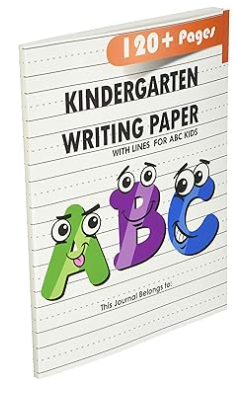
Ready for daily practice?
Our bound handwriting book gives 122 pages of trace-then-write practice for ages 4 to 6. Rated 4.8 by 12,478 families.